
Periampullary Cancer

About Periampullary Cancer

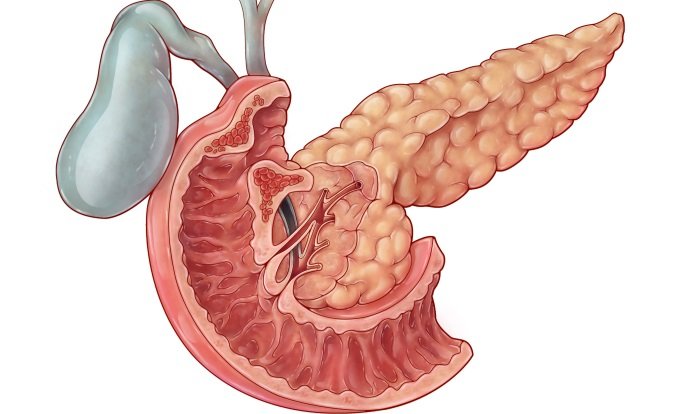
Periampullary cancer refers to tumors that arise near the ampulla of Vater, where the bile duct and pancreatic duct meet and empty into the small intestine. It includes cancers of the pancreas, bile duct, duodenum, and ampulla. These cancers often present with early symptoms like jaundice, offering a better prognosis than pancreatic cancer. Diagnosis involves imaging and biopsy, and treatment typically includes surgery, chemotherapy, or radiation, depending on the stage.

Risk Factors

Common Signs and Symptoms

Diagnosis of Periampullary Cancer

Diagnosis of periampullary cancer involves a combination of imaging, endoscopic, and pathological tests. Contrast-enhanced CT scan or MRI helps visualize the tumor and surrounding structures. Endoscopic ultrasound (EUS) allows detailed imaging and biopsy of the tumor. ERCP (Endoscopic Retrograde Cholangiopancreatography) may be used to assess and sample bile duct lesions. Biopsy confirms the diagnosis, and tumor markers like CA 19-9 may support evaluation and monitoring.

Treatment Options

Surgery

Whipple procedure (pancreaticoduodenectomy) is the most common surgical option for resectable tumors.

Chemotherapy

Used before or after surgery to shrink tumors or prevent recurrence.

Radiation Therapy

May be used with chemotherapy for local control or in inoperable cases.

Palliative Care

Focuses on relieving symptoms like jaundice, pain, and digestive issues in advanced stages.

Make An Appointment

Call Now Button